
Recruitment CRM Software vs ATS: What Growing Teams Actually Need
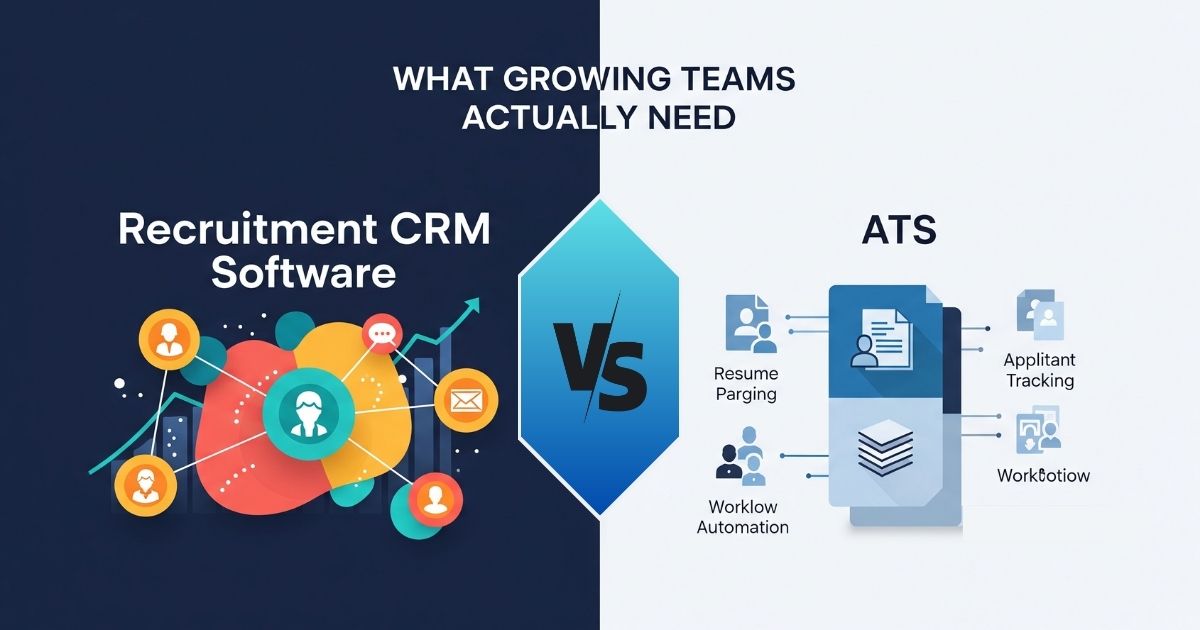
Growing teams face a familiar challenge: how do you manage hundreds of candidates while building meaningful relationships that convert into quality hires? The hiring process has evolved beyond posting jobs and waiting for applications. Today’s recruiters juggle active applicants, passive talent, relationship nurturing, and compliance tracking simultaneously.
The confusion between ATS (Applicant Tracking System) and Recruitment CRM software creates real bottlenecks. Teams invest in tools expecting streamlined hiring, only to find gaps in candidate engagement or pipeline management. Understanding which system addresses your specific pain points determines whether your hiring scales successfully or stalls under pressure.
This guide clarifies when each tool serves growing teams best, how they differ fundamentally, and the practical framework you need to make the right choice. Whether you’re managing 50 or 500 candidates monthly, you’ll understand exactly which Candidate Relationship Management Tool or ATS fits your hiring strategy.
What Is an ATS? (Applicant Tracking System)
What Is Recruitment CRM Software?
The core difference lies in relationship versus transaction focus. While ATS asks “how do we process this applicant efficiently?”, a Recruitment CRM tool asks “how do we engage this talented person until they’re ready to join us?” This approach transforms recruiting from reactive to proactive.
Not Sure Which System Fits Your Team?
Core Differences Between ATS and Recruitment CRM
Candidate Focus: ATS manages short-term interactions with active applicants moving through your hiring funnel. Recruitment CRM software builds long-term relationships with passive candidates who may not be actively seeking new roles but represent future talent.
Communication & Engagement: ATS communication centers on interview scheduling, status updates, and application-related messages. CRM tools enable ongoing nurturing campaigns, personalized content delivery, and relationship-building touchpoints that span months or years.
Workflow Automation: ATS automates application routing, interview scheduling, and compliance documentation. Understanding the agency advantage in using Candidate Relationship Management Tools shows how automation handles engagement sequences, follow-up reminders, and pipeline development activities that maintain relationships until conversion.
Data Management: ATS captures application data, interview feedback, and hiring decisions tied to specific job openings. CRM systems track engagement history, communication preferences, skill development, and relationship strength across your entire talent network.
Scalability for Growing Teams: As hiring volume increases, ATS handles more applications through structured workflows. When recruiting becomes strategic rather than reactive, CRM systems scale your ability to maintain quality relationships without proportionally increasing recruiter workload.
When Growing Teams Should Choose ATS
Consider a growing SaaS company scaling from 50 to 150 employees within eighteen months. They’re filling multiple similar roles simultaneously—account executives, customer success managers, and implementation specialists. The ATS lets them create templates, standardize evaluations, and move candidates through identical processes efficiently. Without this structure, consistency suffers and compliance risks emerge. Organizations seeking to streamline their Hiring workflow can benefit from understanding how structured systems improve candidate experience alongside operational efficiency.
Fast application processing becomes critical when competitive markets require quick offers. If your target candidates receive multiple offers within days of interviewing, ATS speed advantages automated screening, instant interview scheduling, and streamlined approvals determine whether you secure top talent.
Ready to Streamline Your Hiring Process?
When Growing Teams Should Choose Recruitment CRM Software
One rapidly growing marketing agency adopted a Candidate Relationship Management Tool when they recognized their hiring pattern: specialized roles requiring 3-6 month searches among passive candidates. Their recruiters were spending 60% of their time on administrative follow-up instead of relationship building. After implementation, automated sequences maintained candidate engagement, centralized communication history became instantly accessible, and recruiters redirected saved time toward sourcing and strategic conversations. Their time-to-hire for senior roles decreased by 40%. Similar Success stories from Jamaica demonstrate how regional recruiting teams transform candidate engagement through proper CRM implementation.
Can You Use Both?
Build Your Talent Pipeline the Smart Way
Decision-Making Framework for Growing Teams
1. Team Size & Hiring Volume: How many positions do you fill monthly? Are they similar roles allowing standardized processes, or specialized positions requiring individualized approaches? High-volume hiring suggests ATS priority, while specialized recruiting points toward CRM needs.
2. Candidate Engagement Strategy: Does your hiring model rely on inbound applications or proactive outreach to passive candidates? If most hires come from people who found your posted positions, ATS capabilities suffice. If you’re consistently reaching out to people not actively job searching, Candidate Relationship Management System functionality becomes critical.
3. Integration Requirements: What existing tools must your new system connect with? HRIS platforms, background check providers, interview scheduling tools, and communication platforms all need consideration. Evaluate integration capabilities before committing to either system.
4. Reporting & Analytics Needs: What metrics drive your recruiting strategy? Application-to-interview ratios, time-in-stage, and source effectiveness suit ATS reporting. Pipeline health, engagement rates, and relationship conversion metrics require CRM analytics. Your key performance indicators should guide system selection.
5. Long-Term Scalability: Where will your hiring be in 18-24 months? Growing from 5 to 15 recruiters managing 100 active relationships each creates different needs than scaling from 2 to 5 recruiters processing 500 applications monthly. Choose systems that support your trajectory, not just current state.
The right Recruitment CRM software designed specifically for growing teams helps navigate these decisions effectively. Platforms that integrate relationship management with hiring workflows eliminate the need to choose between separate systems.
FAQs
Q: Can small teams benefit from Recruitment CRM software?
A: Yes, even small teams can nurture candidates, improve engagement, and build a talent pipeline. Recruitment CRM software prevents the common small team mistake of losing touch with qualified candidates between hiring cycles. When you only hire occasionally, maintaining relationships with past applicants and passive talent ensures you’re not starting from zero each time a position opens.
Q: Does ATS replace Recruitment CRM software?
A: No, ATS tracks applications while CRM nurtures relationships. Many growing teams use both systems strategically. The ATS manages your hiring process for active applicants, while the CRM builds and maintains your talent pipeline over time. They serve different purposes in a complete recruiting strategy. Combining both with proper ATS Software creates a comprehensive hiring ecosystem.
A: By automating follow-ups, centralizing candidate data, and managing engagement workflows, Recruitment CRM software eliminates manual administrative tasks. Recruiters stop digging through email threads for candidate history, remembering to send follow-up messages, or recreating outreach campaigns for each position. Time saved on administration redirects toward strategic relationship building and candidate conversations.
Q: Which tool is better for passive candidates?
A: Recruitment CRM software focuses on passive candidate engagement and long-term pipeline building. ATS systems assume candidates have already expressed interest by applying. CRM tools provide the nurturing capabilities, engagement tracking, and relationship management features needed to convert passive talent into active applicants over time.
Making the Right Choice for Your Hiring Future
Choosing between ATS and CRM systems isn’t about finding the objectively “best” tool. It’s about matching capabilities to your hiring reality, growth trajectory, and candidate engagement strategy. Growing teams that understand these distinctions build recruiting processes that scale efficiently while maintaining the relationship quality that attracts top talent.
Ready to implement a system that supports your specific hiring needs? Contact us to discuss which approach fits your team’s growth stage and recruiting strategy.
Ready to Get Started?
Get our 14-day free trial to explore the features —the fastest approach in enterprise grade software implementation across recruitment solutions