
Job Board Software vs. Job Portals: What’s the Real Difference?
The world of recruitment has transformed dramatically over the past decade. What once relied on newspaper ads and manual tracking has now shifted into a digital-first hiring ecosystem. Modern recruiters now rely on advanced job board software to manage listings, automate postings, and track applicants efficiently.
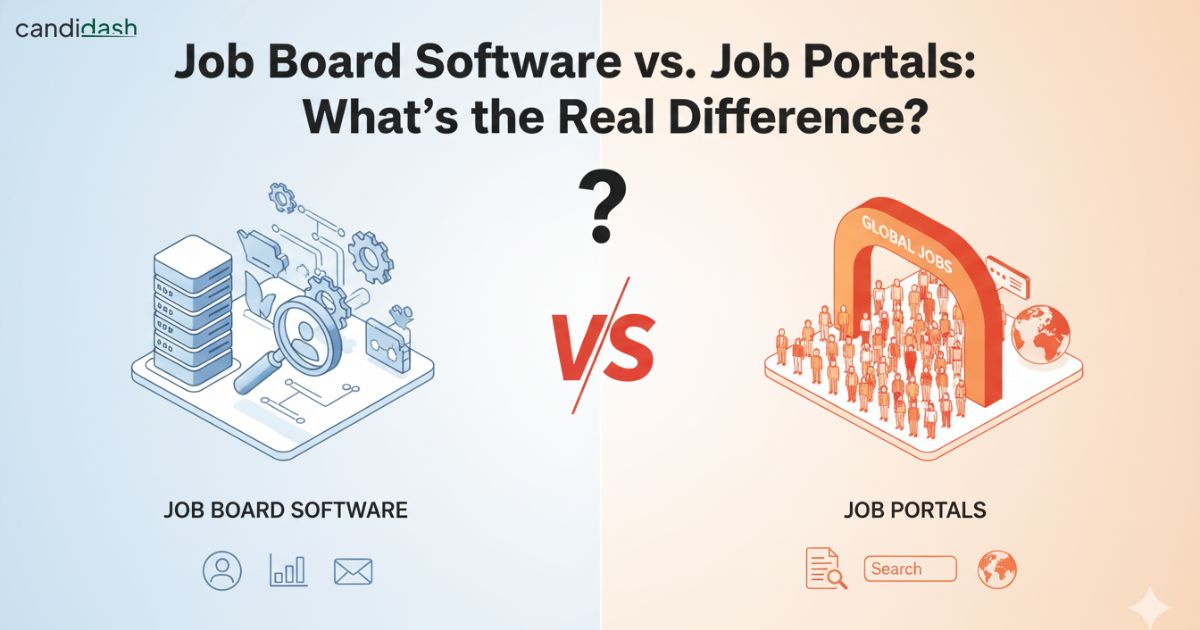
However, as technology advances, many businesses find themselves confused between job portals and job board software. Both tools appear similar on the surface they connect employers and candidates but their purpose and functionality differ significantly.
This article breaks down the real difference between job board platforms and job portals, helping recruiters, HR teams, and businesses choose the right system for their hiring goals.
2. Understanding Job Board Software
Job board software is a specialized recruitment tool that allows businesses or recruitment agencies to create their own branded hiring platform. Unlike third-party portals, it gives full ownership and control over how jobs are posted, displayed, and managed.
Its core functions include:
- Creating and managing job listings
- Automating job postings across multiple channels
- Tracking candidate applications and performance
- Integrating with ATS Software and Recruitment CRM software for end-to-end hiring
If you want to see how this type of system connects with your recruitment pipeline, Candidash provides an all-in-one solution through its Recruitment CRM and dedicated Job Board Software.
3. What Is a Job Portal?
4. Core Differences: Job Board Software vs. Job Portals
| Criteria | Job Board Software | Job Portal |
|---|---|---|
| Ownership | Private (owned by a business or recruitment agency) | Public (third-party platform) |
| Branding | Fully customizable | Generic |
| Control | Full control over data and listings | Limited control |
| Cost | One-time or subscription-based | Pay-per-listing or premium-based |
| Use Case | Recruitment agencies, HR firms, startups | General job seekers & employers |
Job Board Software Offers Ownership and Customization
Businesses using recruitment job board software can design the platform’s look, structure, and communication process. It’s like having a private career hub that strengthens your employer brand.
Job Portals Focus on Mass Reach and Candidate Volume
Recruitment Data Security: Software vs. Portal
Data privacy plays a crucial role in modern hiring. With job board software, all candidate data remains within your system. In contrast, portals store data on external servers, limiting your access and control.
5. Advantages of Job Board Software for Modern Recruitment
Recruiters today need tools that combine automation, customization, and analytics. Job board software delivers all three. Here’s how it gives modern hiring teams a strategic advantage:
Enhanced Employer Branding:
A branded career site allows agencies and companies to showcase culture, values, and unique opportunities.
Custom Filters & Applicant Tracking:
Built-in tools streamline candidate screening and tracking, improving overall hiring speed and quality.
Integration with CRM or ATS Systems:
Software like Recruitment CRM software and ATS Software integrate seamlessly, creating an efficient hiring workflow.
Data Privacy & Analytics:
Recruiters can analyze engagement rates, application trends, and conversion metrics directly from their dashboard.
Cost-Effective for Long-Term Use:
While portals charge per listing, owning a job board platform reduces long-term costs and offers unlimited posting flexibility.
Using job board software gives recruiters end-to-end control over their hiring ecosystem from posting and tracking to onboarding and analysis. Modern job posting platforms now combine automation and AI to help teams scale smarter.
Ready to upgrade your recruitment process?
6. When to Choose Job Board Software Over a Job Portal
- Recruitment agencies managing multiple clients
- Niche job platforms focusing on specific industries
- Companies building internal career sites
The best job board software for recruitment agencies simplifies bulk posting, candidate tracking, and analytics all from a single dashboard. It allows recruiters to scale operations without losing control over data or design.
For agencies using advanced tools like the Recruitment CRM, integrating job posting software can centralize all hiring operations into one system.
7. When Job Portals Make More Sense
Not every business needs a private job platform. Sometimes, a job portal is the faster and simpler choice, especially for:
- Startups or small businesses with limited hiring volume
- Companies seeking quick visibility across a large pool of candidates
- Employers without technical expertise to manage a platform
Job portals are best suited for quick access to a large pool of active candidates. They’re convenient when your goal is reach rather than long-term recruitment management.
However, they may not support advanced features like white-label branding or custom analytics, which growing organizations often need.
8. Can You Use Both Together?
Yes, and in fact, many modern recruiters do. The most effective hiring strategy is often a hybrid one.
You can use job portals to attract mass attention while relying on job board software to manage your internal recruitment pipeline efficiently.
This creates a smooth process where candidates discovered through portals are managed, tracked, and analyzed through your own private system.
This approach also supports hybrid recruitment ecosystems, allowing businesses to balance reach and control.
How job board software integrates with job portals depends on the system you use. Some advanced solutions, like those from Candidash, offer API connections and multi-channel posting features for maximum efficiency.
9. Future Trends in Hiring Technology
Some upcoming trends include:
- AI-Powered Matching: Automated algorithms that predict candidate fit based on behavior and skills.
- White-Label Job Board Solutions: Agencies creating branded job platforms tailored to niche industries.
- Predictive Analytics: Forecasting hiring needs using data-driven insights.
The future of job board software is driven by automation and AI-powered analytics, helping recruiters make smarter, faster hiring decisions.
For insights into how recruitment agencies are using these tools in 2025, see the best recruitment CRM software for agencies.
10. Conclusion: Choosing the Right Tool for Your Recruitment Goals
Both job portals and job board software have their advantages, but they serve different purposes.
If your goal is quick access to active candidates and minimal setup, job portals are a solid choice. But if you value control, branding, and automation, job board software is the smarter investment.
If you want full control over your recruitment process, investing in job board software is a smart step toward building a scalable hiring platform.
To learn more or request a demo, contact the Candidash team and see how their solutions can simplify your recruitment workflow.
FAQs About Job Board Software vs Job Portals
1. What is the main difference between a job portal and job board software?
2. Which is better for recruitment agencies – job portals or job board software?
3. Can job board software integrate with other hiring tools?
Ready to upgrade your recruitment process?
Ready to Get Started?
Get our 14-day free trial to explore the features —the fastest approach in enterprise grade software implementation across recruitment solutions