
How to Choose the Right ATS Software: 12 Must-Have Features for 2026
Why Most Companies Choose the Wrong ATS Software (And How to Avoid It)
What Makes an ATS System "Complete" in 2026?
Don't Let Your ATS Investment Go to Waste
The 12 Must-Have Features Every ATS Application Tracking System Needs
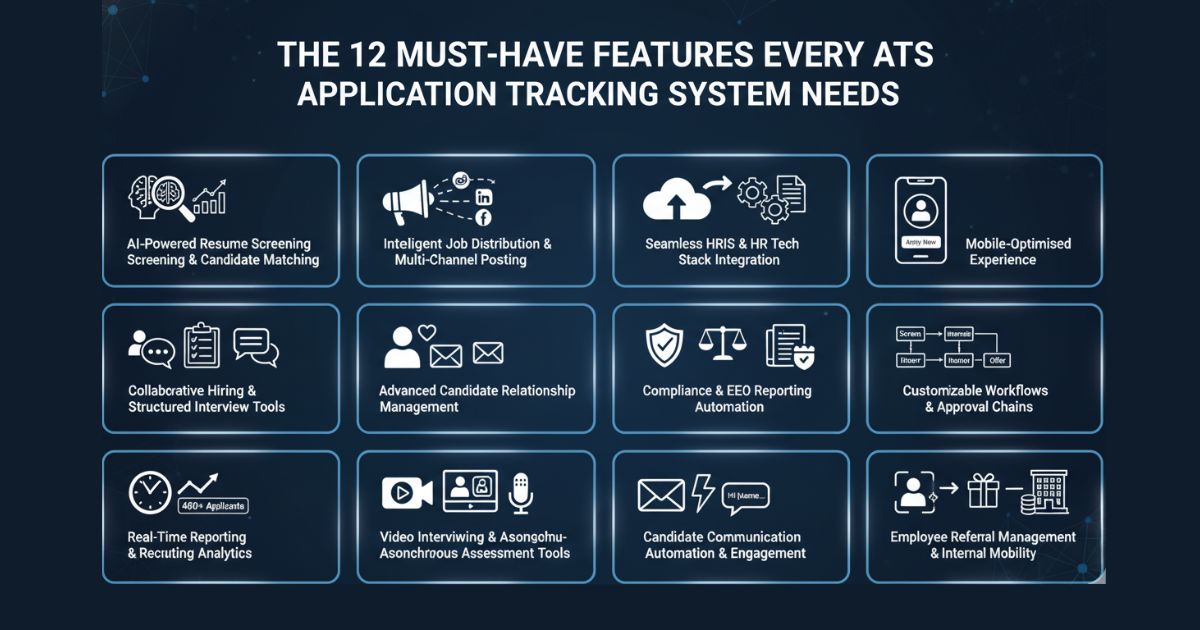
Feature #1: AI-Powered Resume Screening and Candidate Matching
Feature #2: Intelligent Job Distribution and Multi-Channel Posting
Your next hire exists on LinkedIn, Indeed, ZipRecruiter, industry-specific boards, and career sites you’ve never heard of. One-click posting to 100+ channels increases candidate volume by 3x while saving 10+ hours per role.
Feature #3: Seamless HRIS and HR Tech Stack Integration
Feature #4: Mobile-Optimised Candidate Experience
Feature #5: Collaborative Hiring and Structured Interview Tools
Feature #6: Advanced Candidate Relationship Management
An applicant tracking system without CRM functionality is fundamentally incomplete in 2026. This capability transforms recruiting from project-based hiring to continuous relationship management.
Feature #7: Compliance and EEO Reporting Automation
Feature #8: Customizable Workflows and Approval Chains
Feature #9: Real-Time Reporting and Recruiting Analytics
Feature #10: Video Interviewing and Asynchronous Assessment Tools
Feature #11: Candidate Communication Automation and Engagement
Feature #12: Employee Referral Management and Internal Mobility
Ready to Transform Your Recruitment Process?
How to Evaluate ATS Systems: Your Feature-Based Selection Framework
Step 1: Audit Your Current Recruiting Process
Step 2: Create Your ATS Software Requirements Matrix
Step 3: Test the Candidate and Recruiter Experience
Step 4: Validate Integration Capabilities
Vendor claims about integrations mean nothing without evidence. Request documented proof of actual integrations with your existing tools. Ask for customer references using identical integrations.
Step 5: Calculate Total Cost of Ownership
ATS System Comparison: Standalone Versus Integrated Platforms
Standalone Recruitment CRM software offers specialised recruiting functionality with potential cost advantages. You maintain control over specific tool selection, but integration complexity creates data silos and multiple login requirements.
Red Flags to Watch for When Choosing an Applicant Tracking System
Slow interfaces and clunky demo experiences reflect production realities. Dedicated implementation teams signal vendor commitment to customer success. Learning how organisations successfully implement these systems proves invaluable. Explore how companies maximise hiring efficiency through modern platforms and avoid costly mistakes.
Confused About Which ATS Fits Your Budget?
The Future of ATS Technology: What's Coming in 2026-2027
Making Your Final ATS Software Decision
Ready to explore an automated tracking system that delivers all 12 capabilities? See how modern ATS Software helps companies hire faster, smarter, and more efficiently.
Frequently Asked Questions About Choosing ATS Software
Q: How long does it take to implement a candidate tracking system?
A: Simple systems deploy in one to two weeks. Enterprise solutions require four to eight weeks. Implementation timelines depend on integration quantity, data migration scope, customisation requirements, and team training needs. Choose vendors with proven implementation methodologies.
Q: Do I need a standalone ATS or an integrated HR platform?
Final Thoughts: Your Path to Hiring Success
Modern Recruitment CRM software combines applicant tracking with relationship management to nurture talent pipelines effectively. Discover how integrated platforms supporting both hiring and talent development deliver measurable results. Organizations worldwide prove that Recruitment CRM systems drive competitive advantage through smarter hiring practices and candidate engagement.
See firsthand how companies transformed their recruiting outcomes. Review our Jamaica case study to understand real-world implementation success, and explore our career opportunities platform to see recruiting excellence in action.
Need guidance selecting the right platform for your team? Contact us to discuss your specific requirements and explore how integrated solutions address your recruiting challenges.
Ready to Get Started?
Get our 14-day free trial to explore the features —the fastest approach in enterprise grade software implementation across recruitment solutions