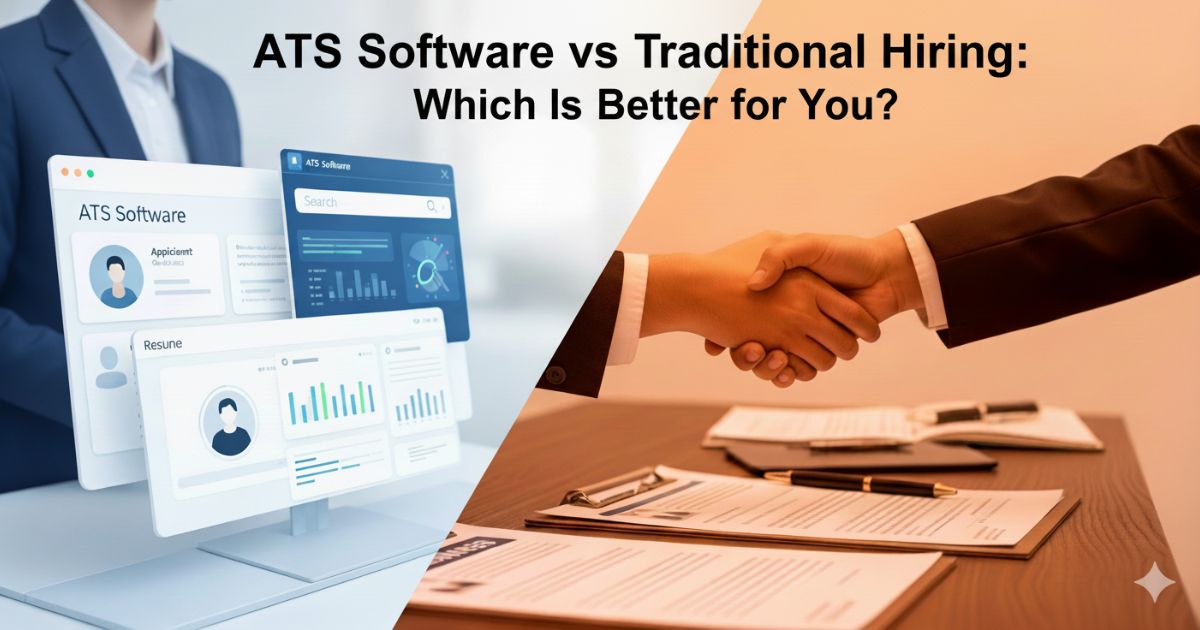
ATS Software vs Traditional Hiring: Which Is Better for You?
If you’re evaluating your recruitment strategy, understanding how Candidash’s ATS Software simplifies hiring can help you make smarter decisions faster.
What Is Traditional Hiring?
Manual Recruitment in a Nutshell
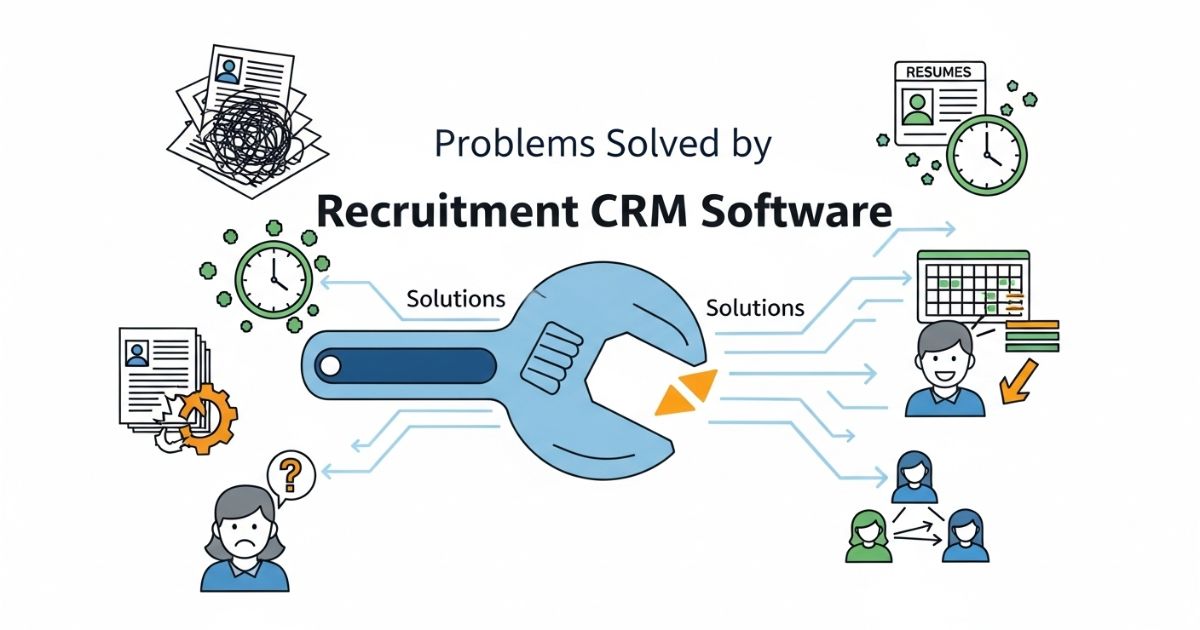
Common Challenges of Traditional Hiring
Time-consuming resume screening is perhaps the biggest bottleneck. Recruiters must manually read through dozens or hundreds of applications, comparing qualifications against job requirements. This process can take days or even weeks for high-volume positions.
Missed candidates due to human bias represents another major concern. When humans manually screen resumes, unconscious biases about names, schools, employment gaps, or formatting choices can cause qualified candidates to be overlooked.
Slow communication and scheduling delays frustrate both recruiters and candidates. Coordinating interview times across multiple stakeholders through email chains or phone tag creates unnecessary friction.
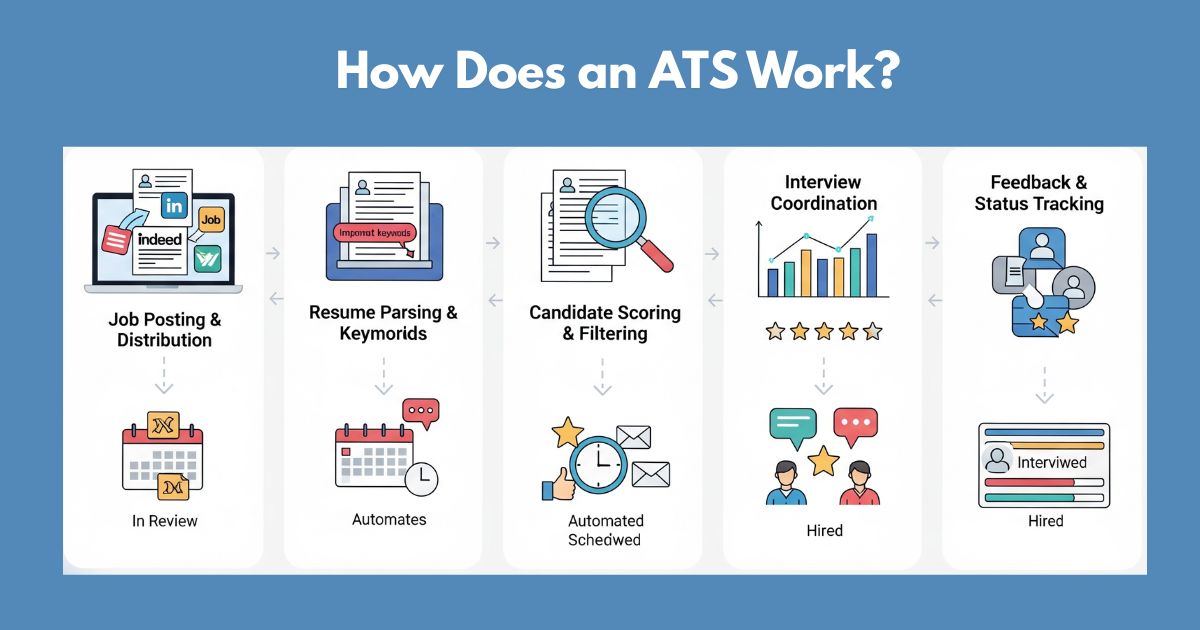
What Is ATS Software and How Does It Work?
The Modern Recruiting Backbone
Key Benefits of Using an ATS
Streamlined hiring workflows mean every step from posting jobs to extending offers happens within one platform. No more switching between email, spreadsheets, and calendar apps.
Reduced bias with AI-assisted screening ensures candidates are evaluated based on skills and qualifications rather than subjective factors. Algorithms don’t make judgments based on names or educational backgrounds.
Centralized candidate data for team collaboration allows hiring managers, recruiters, and executives to access the same real-time information, leave feedback, and make faster decisions together.
Real-time reporting for better decisions provides insights into metrics like time-to-hire, source of hire, and bottlenecks in your process. Data-driven recruitment consistently outperforms gut-feel decision-making.
See how intelligent automation transforms every stage of recruitment.
ATS Software vs Traditional Hiring: Head-to-Head Comparison
1. Efficiency and Time-to-Hire
2. Cost-Effectiveness
3. Quality of Hire
Traditional methods rely heavily on subjective decision-making. Two recruiters reviewing the same resume might reach completely different conclusions based on personal preferences or unconscious biases.
4. Candidate Experience
5. Scalability
When Does Traditional Hiring Still Make Sense?

Niche roles requiring deep industry connections often depend on personal networks and referrals. Executive search and highly specialized technical positions may need the human touch that comes from experienced recruiters who understand subtle cultural and technical nuances.
Industries with limited digital adoption such as certain manufacturing, agriculture, or trades sectors may find their candidate pools aren’t actively using online job platforms.
Hybrid hiring approaches combining human judgment with ATS efficiency often work best. Use technology to handle administrative tasks while preserving personal interaction for interviews and relationship building.
Ready to upgrade your recruitment process?
Why Modern Recruiters Prefer ATS Software
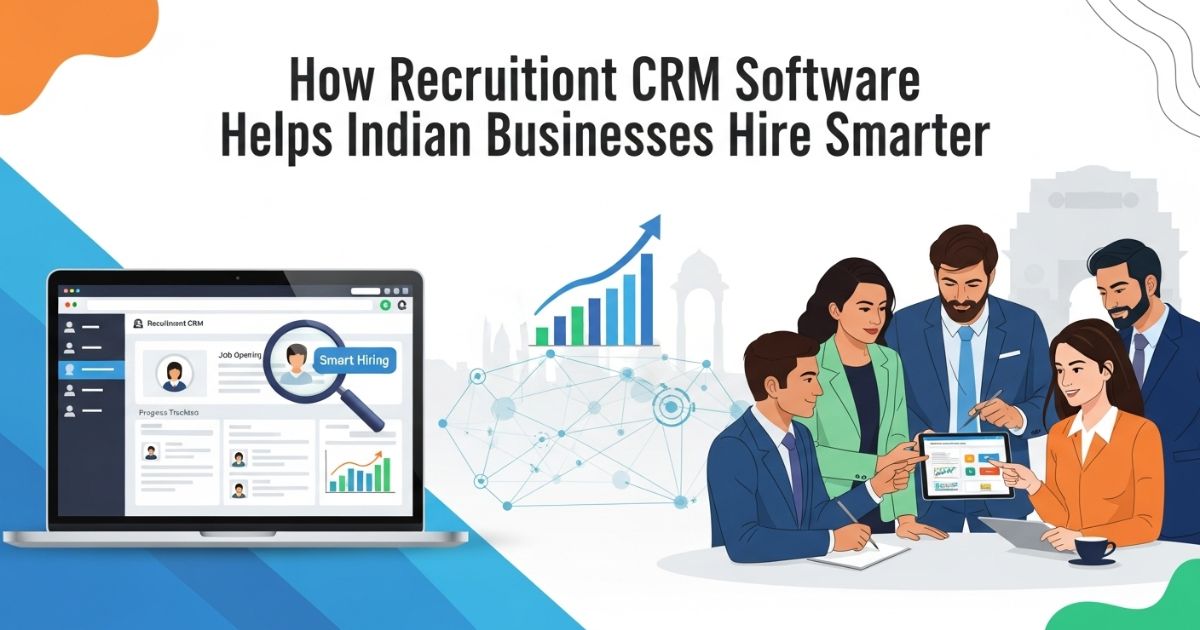
Today’s recruiting landscape demands efficiency. With Recruitment CRM platforms, recruiters shift their focus from paperwork to relationship building. Instead of updating spreadsheets, they spend time understanding candidate motivations and selling opportunities.
Companies using Recruitment CRM software report higher recruiter productivity, better candidate engagement, and stronger hiring outcomes across all metrics.
How to Choose the Right Applicant Tracking System
Factors to Consider
Integration with job boards and HR tools ensures seamless workflow. Your ATS should connect with LinkedIn, Indeed, Naukri, and your existing HRIS or payroll systems.
Custom workflows and automation allow you to design processes matching your unique hiring needs. Look for flexible configuration options rather than rigid, one-size-fits-all solutions.
Real-time analytics and reporting provide visibility into your recruitment funnel. Quality dashboards help identify bottlenecks and measure success against hiring goals.
Scalability for growing teams means the platform should work as well for 10 employees as it does for 1,000. Consider your growth trajectory when making software decisions.
Explore how ATS Software transforms recruitment from chaos to clarity.
ATS vs Traditional Hiring: Quick Comparison Chart
| Factor | Traditional Hiring | ATS Software |
|---|---|---|
| Resume Screening | Manual | Automated (AI-based) |
| Cost | High | Lower long-term |
| Candidate Experience | Slower | Seamless, automated |
| Scalability | Limited | Highly scalable |
| Analytics | None | Real-time reports |
| Time-to-Hire | 3-6 weeks | 1-2 weeks |
| Collaboration | Email chains | Centralized platform |
Frequently Asked Questions (FAQ)
Q1. What makes ATS software better than traditional hiring methods?
Q2. Is an Applicant Tracking System suitable for small businesses?
Q3. Can ATS software replace recruiters entirely?
No. An ATS System handles administrative tasks but cannot replace human judgment, relationship building, and strategic thinking. The best results come from combining technology efficiency with human expertise. Look for signs your recruitment process needs an upgrade to stay competitive.
Q4. How does an ATS improve candidate experience?
Q5. What features should I look for in an ATS System?
Essential features include resume parsing, automated job posting, interview scheduling, candidate communication tools, customizable workflows, analytics dashboards, and integrations with job boards and HRIS platforms. For recruitment agencies seeking the best CRM software in 2025, client management capabilities are also critical.
Conclusion
Ready to transform your hiring process? Contact us to see how Candidash’s ATS Software can simplify recruitment, reduce time-to-hire, and help you build stronger teams faster.
Ready to upgrade your recruitment process?
Ready to Get Started?
Get our 14-day free trial to explore the features —the fastest approach in enterprise grade software implementation across recruitment solutions