Transforming Talent Acquisition: The Ultimate Guide to Recruitment Process Digitization and Automation

Hiring is no longer just about filling vacancies. It’s a strategic function focused on acquiring talent that aligns with your company culture, drives long-term goals, and adapts to evolving job roles. As challenges like critical skill shortages and the global demand for greater diversity intensify, a smarter, more agile recruitment process is no longer optional. At Candidash, we see firsthand how integrated digital tools are empowering organizations to build the resilient, high-performing teams of the future. This guide provides a comprehensive roadmap for making that transition.
Why Traditional Recruitment is Falling Short in 2025
- For Candidates: Applicants often face the “black hole” syndrome, where they submit a resume and hear nothing back for weeks, if ever. The experience feels impersonal, opaque, and disrespectful of their time.
- For Recruiters: HR teams are buried in administrative tasks. Manually screening hundreds of resumes, coordinating interview schedules across multiple calendars, and sending repetitive update emails consumes valuable time that could be spent on strategic sourcing and relationship-building.
- For Businesses: The lack of data makes strategic workforce planning nearly impossible. Without clear metrics on what’s working, it’s difficult to justify budgets, improve processes, or measure the quality of hire. This manual overhead leads to longer hiring cycles, higher costs, and a significant competitive disadvantage.
The Core Components of a Modern Recruitment Technology Stack
Applicant Tracking System (ATS): Your Central Command
Candidate Relationship Management (CRM): Building Talent Pipelines
Job Board Software and Distribution Tools: Maximizing Your Reach
To attract the best talent, your job postings need to be seen in the right places at the right time. Modern job board software allows you to create a branded, SEO-friendly career page on your own website. Programmatic job advertising tools then take this a step further, using algorithms to automatically distribute your listings across a multitude of platforms—from major job boards like LinkedIn and Indeed to niche industry sites—optimizing your ad spend for the best possible return on investment.
Digital Onboarding Portals: The Crucial First Impression
The Measurable Benefits of Digitizing Your Hiring Process
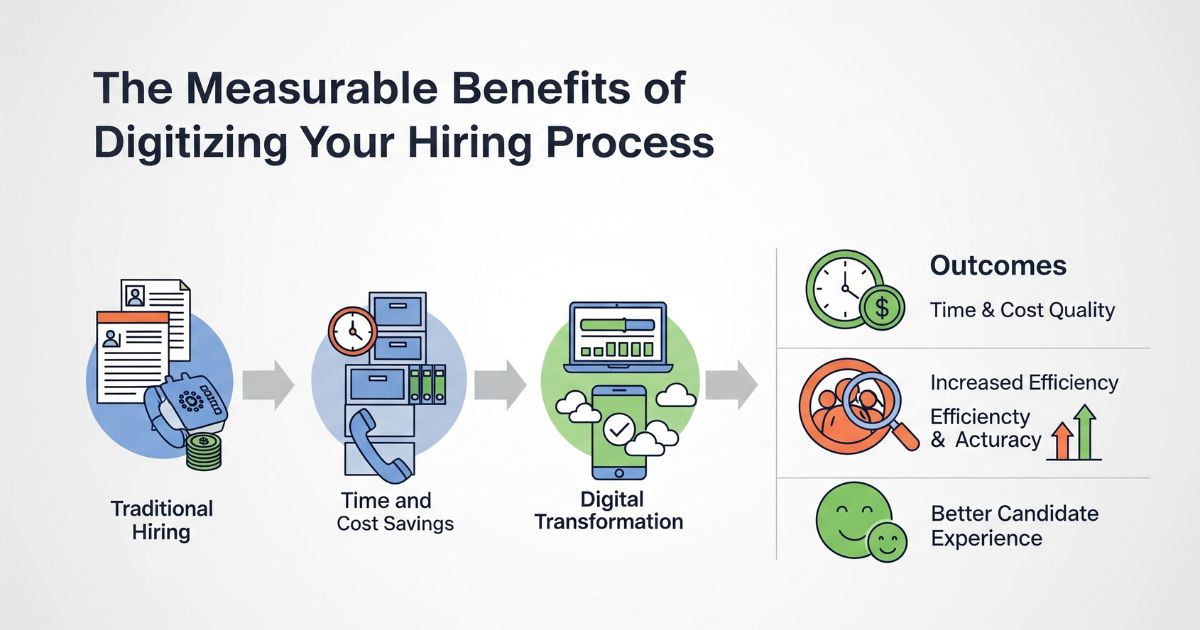
Slash Your Time-to-Hire
Elevate the Candidate Experience
Make Data-Driven Strategic Decisions
Scale Your Hiring Efforts Seamlessly
Ready to upgrade your recruitment process?
A Practical Guide to Choosing the Right Recruitment Software
- Audit Your Current Process: Before looking at any software, map out your existing hiring workflow. Identify the biggest pain points, manual bottlenecks, and sources of frustration for your team and for candidates.
- Define Your Must-Have Features and Budget: Based on your audit, create a checklist of non-negotiable features. Do you need multi-language support? Advanced analytics? Integration with a specific HRIS? Establish a realistic budget at this stage.
- Research and Shortlist Vendors: Look for providers who have strong case studies in your industry or region. Read reviews on sites like G2 and Capterra, and create a shortlist of 3-5 vendors that appear to meet your criteria.
- Request Demos and Involve Your Team: A live demo is the best way to see the software in action. Crucially, involve the end-users—your recruiters and hiring managers—in this process. Their buy-in is essential for successful adoption.
- Check for Integration Capabilities and Support: Ensure the software can seamlessly integrate with the other systems you rely on (like payroll and HRIS). Inquire about the vendor’s customer support model, training programs, and implementation assistance.
Overcoming the Hurdles of Digital Transformation
- Managing Change Within Your HR Team: The biggest hurdle is often cultural, not technical. To ensure team buy-in, communicate the “why” behind the change. Frame the new tools not as a replacement for recruiters, but as a way to empower them to focus on more strategic, high-impact work. Provide comprehensive training and celebrate early wins to build momentum.
- Solving the Integration Puzzle: A disconnected tech stack creates more problems than it solves. Work closely with your IT department and the software vendor to plan the integration process carefully. A phased rollout, starting with one department or role type, can often make this process more manageable.
- Ensuring Data Privacy and Security: Handling candidate data carries immense responsibility. Choose vendors who are compliant with regulations like GDPR and demonstrate a strong commitment to cybersecurity. Clearly define your internal data handling policies and communicate them to your team.
Real-World Impact: Success Stories in Recruitment Automation
- Government Department of Jamaica – Ministry of Education: Before implementing a centralized job board powered by a Recruitment CRM and ATS, hiring across schools was fragmented and manual. After deployment, the ministry achieved 85% faster job filling and 100% centralized application tracking.
- Mid-sized IT Firm in India: A growing IT firm based in a competitive Indian tech hub used a Recruitment CRM to build a pipeline of passive candidates. This led to a 30% increase in successful hires sourced directly from their internal talent pool, reducing agency fees.
- UAE-Based Retail Chain: By digitizing their employee intake with an onboarding portal, this retail giant reduced onboarding time from seven days to just 48 hours, improving early employee engagement and dramatically reducing offer drop-offs.
The Future is Now: Emerging Trends in Recruitment Technology
- Hyper-Intelligent AI: Beyond simple keyword matching, AI will offer predictive analytics to identify candidates most likely to succeed in a role. Ethical AI will also be paramount, with systems designed to audit for and mitigate unconscious bias in the screening process.
- Deepening the Focus on DEI: Technology will play a greater role in creating equitable hiring processes. Tools that perform “blind” resume reviews (hiding demographic information) and analyze job descriptions for biased language will become standard.
- Blockchain for Verifiable Credentials: Verifying candidate credentials will become more secure and instant through decentralized, tamper-proof records on the blockchain, reducing fraud and accelerating background checks.
- Hyper-Personalization at Scale: Drawing inspiration from e-commerce, recruitment platforms will use behavioral data to deliver a completely personalized candidate journey, with micro-targeted job recommendations and content tailored to each individual’s profile.
Your Strategic Advantage in the War for Talent
The future of talent acquisition is intelligent, automated, and ready to scale with you. To see how a fully integrated recruitment suite can revolutionize your hiring process, contact us for a personalized walkthrough today.
Ready to upgrade your recruitment process?
Ready to Get Started?
Get our 14-day free trial to explore the features —the fastest approach in enterprise grade software implementation across recruitment solutions